
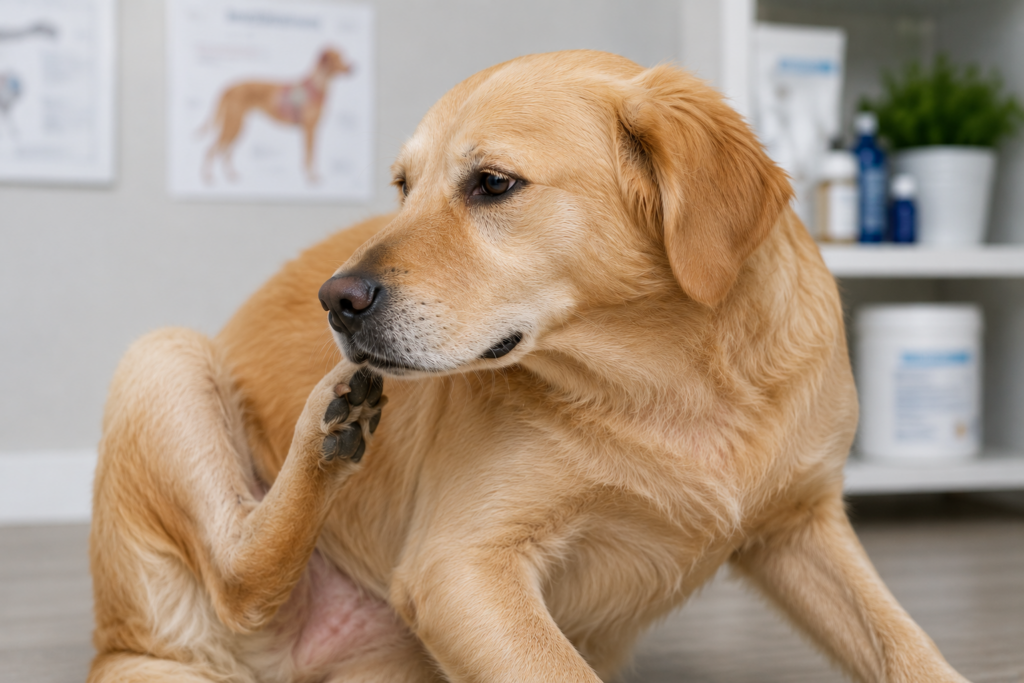
If your dog is constantly scratching, chewing at their paws, or suffering from recurring ear infections, allergies may be the cause. Allergies are one of the most common reasons dogs visit the veterinarian, and they can significantly affect your pet’s comfort and quality of life.
While allergies cannot always be cured, they can often be successfully managed once the underlying trigger is identified. At Salmon Creek Veterinary Clinic, we help dog owners throughout Vancouver, WA diagnose and treat skin allergies, food allergies, and environmental allergies so their pets can enjoy healthier, itch-free lives.
What Causes Allergies in Dogs?
An allergy occurs when your dog’s immune system overreacts to a substance that would normally be harmless.
The three most common types of allergies include:
- Environmental (Seasonal) Allergies
- Food Allergies
- Flea Allergy Dermatitis
Some dogs may even suffer from more than one type of allergy at the same time.
Environmental Allergies (Atopic Dermatitis)
Environmental allergies are among the most common allergies seen in dogs.
Common allergens include:
- Tree pollen
- Grass pollen
- Weed pollen
- Mold spores
- Dust mites
- Household dust
- Storage mites
- Certain fabrics or cleaning products
Many dogs experience worsening symptoms during spring and summer, while others have year-round allergies because they’re allergic to indoor allergens like dust mites.
Symptoms of Environmental Allergies
Signs may include:
- Constant scratching
- Chewing or licking paws
- Red, inflamed skin
- Frequent ear infections
- Hair loss
- Hot spots
- Face rubbing
- Itchy eyes
- Excessive licking of legs or belly
- Skin infections
Food Allergies in Dogs
Food allergies are less common than environmental allergies but can cause significant skin and digestive issues.
The most common food allergens include:
- Beef
- Chicken
- Dairy
- Eggs
- Wheat
- Soy
- Lamb (less common today)
- Fish (occasionally)
Contrary to popular belief, grain allergies are actually uncommon in dogs.
Symptoms of Food Allergies
Food allergies often cause:
- Year-round itching
- Ear infections
- Paw chewing
- Face rubbing
- Skin infections
- Vomiting
- Diarrhea
- Gas
- Soft stools
- Chronic anal gland problems
Unlike seasonal allergies, food allergies generally occur throughout the year.
Flea Allergy Dermatitis
Some dogs are allergic to flea saliva—not just the flea bite itself.
A single flea bite can trigger intense itching for days or even weeks.
Symptoms Include:
- Severe itching
- Hair loss near the tail
- Biting the hindquarters
- Red bumps
- Scabs
- Skin infections
Even indoor dogs can develop flea allergies.
Can Dogs Develop Allergies Later in Life?
Yes.
Many dogs develop allergies between 1 and 3 years of age, but some don’t develop symptoms until they’re much older.
It’s also possible for a dog to suddenly become allergic to a food they’ve eaten for years.
Common Symptoms of Dog Allergies
If your dog has allergies, you may notice:
- Excessive scratching
- Constant licking
- Paw chewing
- Ear infections
- Red skin
- Hair loss
- Hot spots
- Skin odor
- Frequent skin infections
- Face rubbing
- Scooting
- Runny eyes
- Sneezing
- Chronic diarrhea
- Vomiting
Some dogs develop secondary bacterial or yeast infections because their skin barrier becomes damaged from excessive scratching.
How Veterinarians Diagnose Dog Allergies
Finding the cause of your dog’s allergies often requires several steps. There isn’t one simple test that identifies every type of allergy.
Your veterinarian will begin with a complete physical examination and discuss:
- When symptoms started
- Whether symptoms are seasonal
- Diet history
- Flea prevention
- Previous medications
- Environmental changes
A thorough examination is often the first step toward identifying the underlying cause.
Skin Cytology
One of the first diagnostic tests involves examining skin cells under a microscope.
This helps identify:
- Bacteria
- Yeast
- Inflammation
- Skin infections
Treating these infections often provides significant relief while the underlying allergy is investigated.
Flea Examination
Your veterinarian will check for evidence of:
- Fleas
- Flea dirt
- Flea allergy dermatitis
Because even one flea can trigger severe itching, year-round flea prevention is often recommended.
Food Elimination Trial
The gold standard for diagnosing food allergies is an elimination diet.
Your dog will eat a prescription hypoallergenic or hydrolyzed diet exclusively for approximately 8–12 weeks.
No treats, table scraps, flavored medications, or chew toys should be given during the trial.
If symptoms improve and then return after the original diet is reintroduced, a food allergy is confirmed.
Allergy Testing
If environmental allergies are suspected, your veterinarian may recommend allergy testing.
Testing options include:
Intradermal Skin Testing
Often performed by veterinary dermatologists, tiny amounts of common allergens are injected into the skin to identify allergic reactions.
This is considered the most accurate test for environmental allergies.
Blood Allergy Testing
Blood tests measure your dog’s immune response to environmental allergens.
While they are not used to diagnose food allergies, they can help develop allergy immunotherapy (allergy shots or oral drops).
Additional Diagnostic Testing
Depending on your dog’s symptoms, your veterinarian may recommend:
- Skin scrapings to rule out mites
- Fungal testing
- Ear cytology
- Bloodwork
- Urinalysis
- Thyroid testing (in older dogs)
- Biopsy for chronic skin disease
How Are Dog Allergies Treated?
Treatment depends on the type and severity of the allergy.
Your veterinarian may recommend:
Medications
- Anti-itch medications
- Prescription allergy medications
- Corticosteroids (short-term)
- Antibiotics
- Antifungal medications
Allergy Immunotherapy
Customized allergy injections or oral drops gradually help desensitize your dog’s immune system to environmental allergens.
Many dogs experience long-term improvement with immunotherapy.
Prescription Diets
Dogs diagnosed with food allergies require a long-term diet that avoids triggering ingredients.
Flea Prevention
Monthly flea prevention is essential for dogs with flea allergy dermatitis.
Medicated Shampoos
Special shampoos can:
- Remove allergens from the skin
- Reduce bacteria
- Treat yeast
- Moisturize irritated skin
Can Dog Allergies Be Cured?
Most allergies cannot be completely cured.
However, with proper diagnosis and treatment, many dogs experience significant relief and can live comfortable, active lives.
Managing allergies often involves a combination of:
- Preventive care
- Medication
- Diet
- Environmental management
- Regular veterinary monitoring
Our Health Maintenance Services focus on keeping your dog healthy year-round through preventive care, parasite control, nutritional guidance, and ongoing management of chronic conditions like allergies.
When Should You Schedule a Veterinary Appointment?
Contact your veterinarian if your dog:
- Scratches constantly
- Has recurring ear infections
- Licks their paws daily
- Develops hot spots
- Has chronic skin infections
- Loses hair
- Has recurring vomiting or diarrhea
- Has skin that smells unusual
- Isn’t improving with over-the-counter products
The sooner allergies are diagnosed, the sooner your dog can find relief and avoid chronic skin damage.
Helping Your Dog Live Comfortably
Living with allergies doesn’t have to mean living with constant itching. Identifying the cause early allows your veterinarian to create a treatment plan that keeps your dog comfortable while reducing flare-ups throughout the year.
If your dog is scratching more than usual, chewing their paws, or experiencing recurring ear infections or skin problems, schedule an appointment with Salmon Creek Veterinary Clinic. Our experienced team will work with you to identify the underlying cause and develop a personalized treatment plan to help your dog feel their best.