
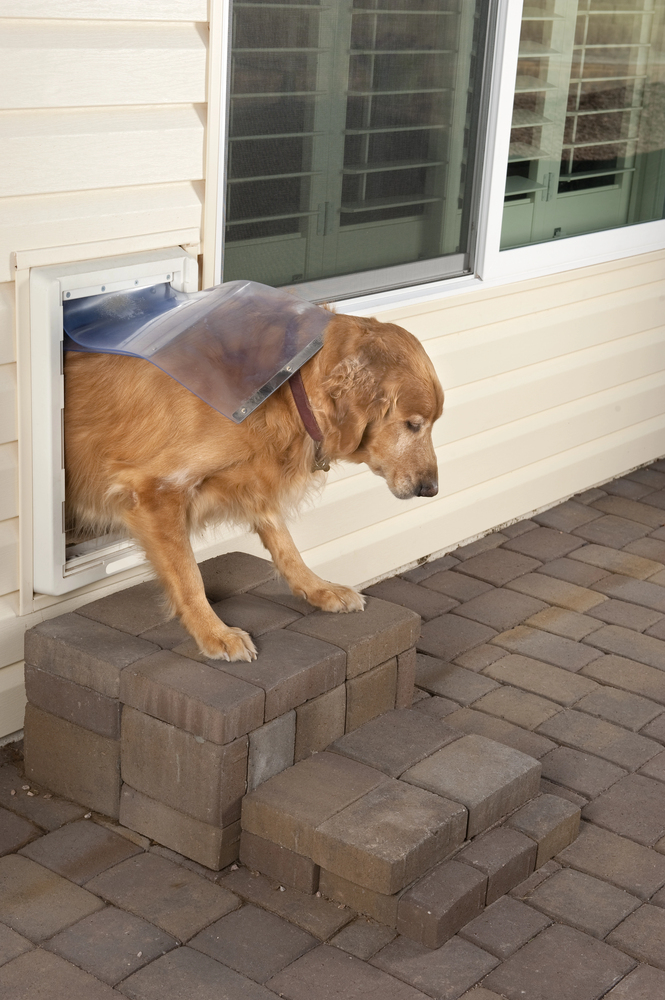
No More Accidents Indoor – Dog Door Training
Installing a doggie door seems like it should instantly solve potty problems—but many dog owners are surprised when their dog continues to urinate inside the house. This is a very common issue and usually has nothing to do with stubbornness or “bad behavior.” Most dogs simply need guidance, confidence, and consistency to understand how and when to use the door.
At Salmon Creek Vet Clinic, we regularly help pet parents work through doggie door training challenges and determine whether indoor urination is behavioral, environmental, or medical. If you’re local, our team at our Vancouver, WA veterinary clinic is here to help you get to the root of the issue.
Why Dogs Urinate Inside Even With a Doggie Door
Dogs don’t automatically understand that a doggie door leads to an appropriate bathroom area. Many dogs find the door unfamiliar or intimidating—especially if the flap touches their body, makes noise, or feels unpredictable. Hesitation or fear can cause dogs to delay going outside until it’s too late, leading to accidents indoors.
In other cases, potty training may not be fully established. Puppies may not have complete bladder control yet, and rescue dogs may have learned different habits in previous homes. Stress also plays a role—changes such as moving, new pets, schedule disruptions, or even installing the doggie door itself can trigger a temporary regression.
Finally, it’s important to consider medical causes. Sudden indoor urination can sometimes be linked to urinary tract infections (UTIs), bladder inflammation, hormonal changes after spaying/neutering, or age-related incontinence. If accidents start suddenly, increase in frequency, or your dog seems uncomfortable, a veterinary exam is strongly recommended.
Step-by-Step: How to Train Your Dog to Use a Doggie Door
Successful doggie door training requires patience and positive reinforcement. Start slowly and let your dog build confidence at their own pace. Avoid forcing your dog through the flap—this often increases fear and makes training take longer.
- Start with the flap open: Hold the flap open so your dog can clearly see the outside and walk through without resistance.
- Use high-value rewards: Encourage your dog with small treats, praise, or a favorite toy.
- Keep sessions short: Practice a few minutes at a time, several times per day.
- Train both directions: Dogs must learn “out” and “back in” so they feel confident using the door independently.
- Never push or shove: If your dog hesitates, pause and go slower—confidence is the goal.
- Reward immediately: Give the treat or praise right after they pass through the door so the connection is clear.
Many dogs need several days—or even a couple of weeks—before they fully trust the door. Consistency matters more than speed.
Reinforcing Proper Potty Behavior
Even with a doggie door, dogs still need reinforcement for going potty outside. Praise and reward your dog immediately after they urinate outdoors. This helps them connect the bathroom behavior—not just the door—with a positive outcome. Over time, using the doggie door becomes the natural first choice.
Routine is still important, too. Consistent feeding times and predictable daily rhythms help regulate your dog’s bladder. A doggie door supports independence, but structure helps prevent accidents—especially during training.
What to Do If Your Dog Keeps Urinating Inside
If accidents continue, don’t panic—this usually means your dog needs clearer guidance, better environmental setup, or a medical check. The goal is to prevent repeat accidents while building reliable habits.
- Clean accidents thoroughly: Use an enzymatic cleaner to fully remove odor. If scent remains, dogs are more likely to reuse the same spot.
- Limit indoor freedom temporarily: Use baby gates or a crate to prevent unsupervised roaming until your dog is more consistent.
- Watch for subtle signals: Pacing, sniffing, circling, or suddenly leaving the room can indicate they need to go.
- Redirect quickly: When you notice signals, guide your dog to the doggie door right away, then reward them for going out.
Avoid punishment or scolding for accidents. This can increase anxiety and lead to hiding behavior, making the issue harder to correct.
When a Veterinary Visit Is Important
If your dog suddenly starts having accidents, urinates frequently, strains, seems uncomfortable, drinks much more than usual, or previously used the doggie door successfully and then regressed, it’s time to rule out medical causes.
A veterinary exam and simple testing can identify many common urinary issues quickly. If you need support, our team can help through our veterinary services and treatment options.
Consistency and Support Lead to Success
Learning to use a doggie door is a new skill—not an instinct. With patient training, positive reinforcement, and veterinary guidance when needed, most dogs adapt successfully and indoor urination issues resolve.